
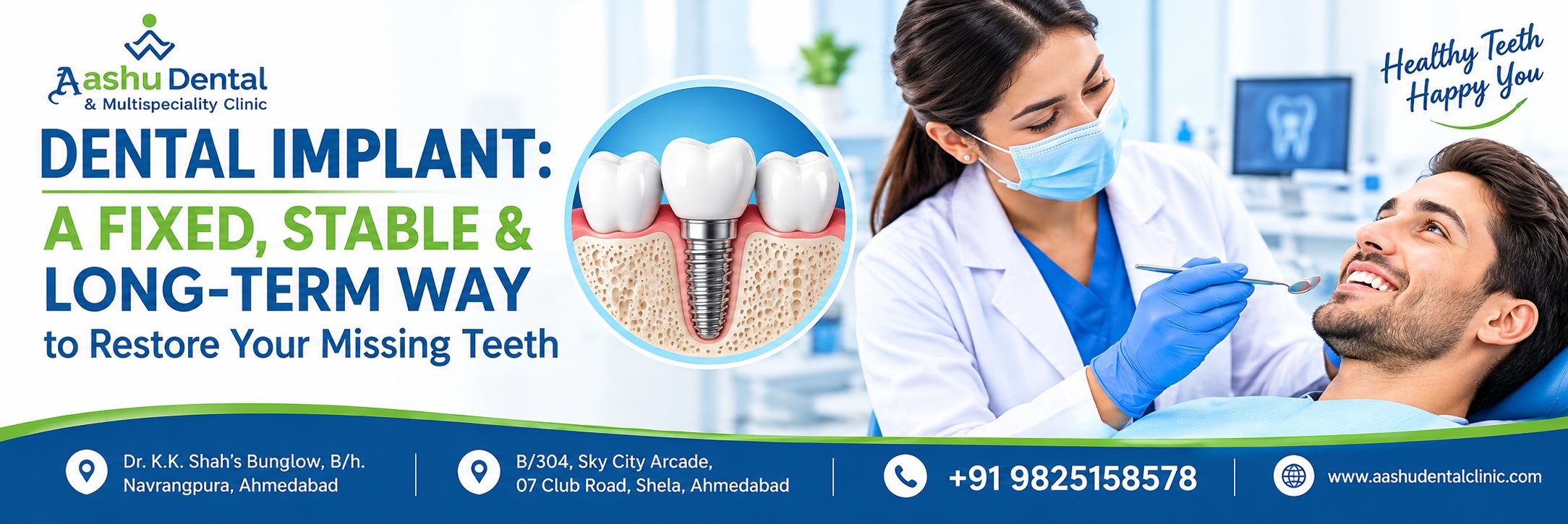
Losing a tooth can affect more than just your smile. It can make chewing difficult, change your facial appearance, and reduce your confidence while speaking or eating. If you don’t replace a missing tooth in time, it can also lead to other oral health problems. Over time, the surrounding teeth can gradually shift towards the space, while the opposing tooth may move out of its normal position. The jawbone in the area of the missing tooth can also begin to shrink due to a lack of stimulation. Modern dentistry offers several options for replacing missing teeth, including dental bridges, removable dentures, and dental implants. Among these options, dental implants are a popular choice because they provide stable support, natural-looking results, and long-term functionality.
What Are Dental Implants?
A Dental implant is a small, screw-shaped structure, usually made of medical-grade titanium, that replaces the root of a missing tooth by being placed into the jawbone. It acts as a strong foundation for an artificial tooth and helps restore normal chewing function and the appearance of your smile. A dental implant restoration generally consists of three main components: the implant fixture, which is the titanium screw placed inside the jawbone and gradually integrates with the surrounding bone through a process called osseointegration; the abutment, which connects the implant fixture to the artificial tooth; and the dental crown, which is the visible part designed to resemble a natural tooth in shape, size, and colour. Together, these components provide a stable and functional replacement for a missing tooth.
How Does Dental Implant Surgery Work?
Dental implant surgery is a carefully planned procedure that involves placing an implant into the jawbone and restoring it with an artificial tooth. The treatment generally begins with a detailed dental examination to evaluate the gums, existing teeth, and jawbone condition. Diagnostic investigations such as OPG and CBCT scans may be recommended to assess bone quantity, bone quality, and the position of important anatomical structures. During the surgical procedure, the implant fixture is placed into the jawbone under local anaesthesia. After placement, the implant gradually integrates with the surrounding bone.
This healing process may take around three to six months or sometimes longer, depending on bone quality, overall health, and individual healing capacity. Once the implant achieves sufficient stability, the abutment and artificial dental crown are attached. The final crown is designed to match the natural teeth and restore comfortable chewing and appearance. The treatment timeline may vary from patient to patient depending on individual clinical conditions.
What Are the Advantages of Dental Implants Over Other Tooth Replacement Options?
Dental implants offer several advantages compared with traditional tooth replacement methods. One of their biggest benefits is that they replace the missing tooth root and provide support directly through the jawbone. They help preserve the jawbone by transferring biting forces to the surrounding bone, which may reduce bone loss in the treated area. Unlike traditional dental bridges, which generally require support from neighbouring teeth, individual dental implants are independently supported, so healthy adjacent teeth usually do not need to be trimmed. Another important advantage is their natural appearance, as implant-supported crowns are designed to resemble natural teeth in shape and colour. Dental implants also provide better stability than conventional removable dentures, making everyday activities such as eating and speaking more comfortable. With proper oral hygiene, regular dental check-ups, and professional maintenance, dental implants can last for many years, although their longevity depends on individual oral health and maintenance.
Dental Implants vs Dentures: Which Is Better?
Dental implants and dentures are both commonly used for replacing missing teeth, but they work differently. Traditional dentures are removable appliances that rest on the gums and are supported by the underlying jawbone and soft tissues. Patients need to remove them for cleaning and generally take them out at night, as advised by their dentist. Over time, changes in the jawbone and gums may affect their fit, sometimes requiring adjustments or relining. Dental implants, on the other hand, are placed into the jawbone and provide fixed support for artificial teeth. They generally offer better stability and can feel more like natural teeth during everyday activities.
For patients who have lost most or all of their teeth, implant-supported dentures are another option. These dentures attach to dental implants using special connectors, offering improved stability compared with conventional removable dentures while allowing removal for cleaning in certain designs. Although dentures may be more affordable initially, dental implants can be a valuable long-term option. The right treatment depends on your bone condition, oral health, budget, and personal preferences.
What Are the Limitations of Dental Implant Treatment?
Although dental implants offer several benefits, they may not be suitable for every patient. Sufficient jawbone quantity and quality are important for successful implant placement. Patients with significant bone loss may require additional procedures, such as bone grafting, before or during implant treatment. Certain medical conditions, uncontrolled diabetes, smoking habits, poor oral hygiene, and some medications can also affect healing and implant success. Conditions such as osteoporosis or thyroid disorders require individual medical and dental assessment rather than automatically ruling out implant treatment. Dental implants may also involve a higher initial cost than removable dentures. Therefore, a proper dental examination and consultation are important before deciding on implant treatment.
What Is the Cost of Dental Implant Treatment?
The cost of dental implant treatment depends on several factors, including the number of implants required, implant brand, materials used, bone condition, and complexity of the procedure. At Aashu Dental & Multispeciality Clinic, the indicative implant cost is approximately Rs. 25,000 to Rs. 50,000 per implant. This is not a fixed package price, and the final treatment cost may vary depending on the patient’s dental condition and any additional procedures required. Whether you need a single tooth implant, multiple dental implants, or full-mouth rehabilitation, it is advisable to consult a dentist to understand the complete treatment plan and estimated expenses before starting the procedure.
What Is an Immediate Dental Implant Procedure?
An immediate dental implant is a procedure in which an implant is placed into the tooth socket immediately after the removal of a tooth. It may be considered when a tooth cannot be saved and requires extraction. This treatment needs careful planning and proper clinical evaluation. The dentist assesses the surrounding bone, gum condition, and infection status, along with radiographic investigations such as OPG or CBCT scans when required. Immediate implant placement may reduce the overall treatment time and the number of visits in selected cases. However, it is not suitable for everyone. The decision depends on bone availability, tissue condition, implant stability, and other clinical factors.
Restore Your Smile with Dental Implants at Aashu Dental & Multispeciality Clinic
Dental implants are an effective modern solution for replacing missing teeth and restoring comfortable chewing, natural-looking smiles, and confidence. However, successful treatment requires accurate diagnosis, proper treatment planning, and regular follow-up care. At Aashu Dental & Multispeciality Clinic, patients can receive dental implant consultation and treatment planning based on their individual oral health requirements.
The clinic has in-house OPG and CBCT T2 technology machines to support dental diagnosis and treatment planning. If you have lost a tooth or are planning to undergo tooth extraction, consulting a dentist at the right time can help you understand the available replacement options and prevent further complications. Visit Aashu Dental & Multispeciality Clinic to discuss your dental implant requirements and take the first step towards restoring your smile and oral health.
Comments are closed