
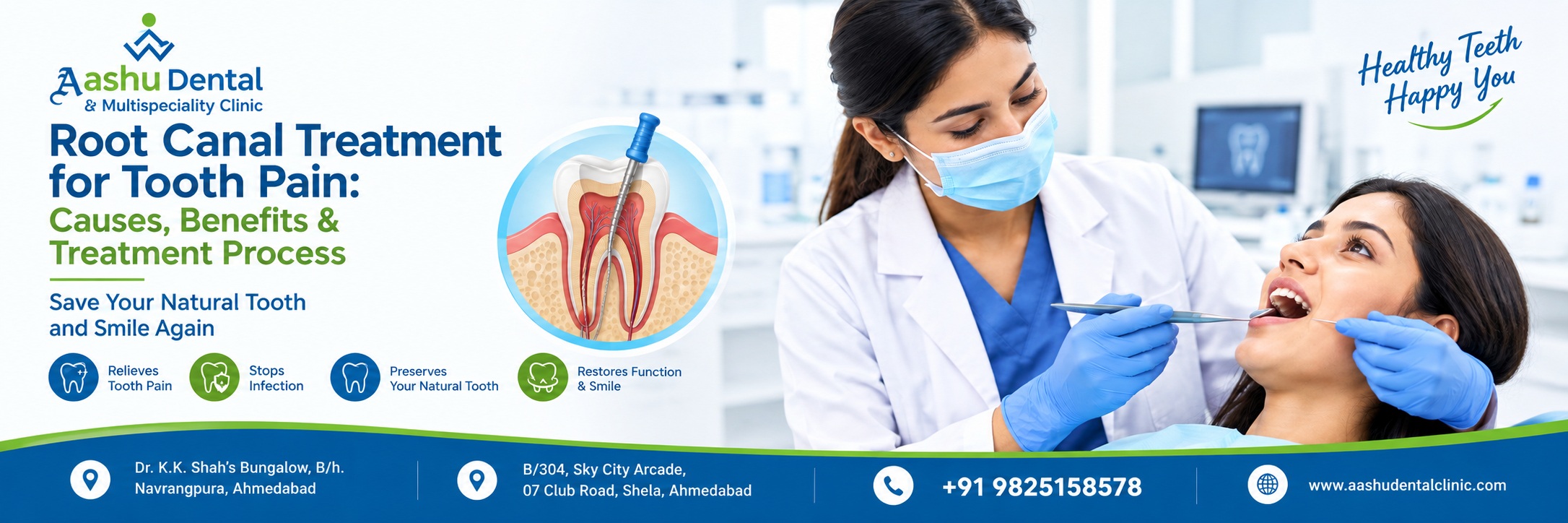
Tooth pain can be more than just a temporary discomfort. When a tooth hurts while eating, drinking something hot or cold, or even at rest, it may indicate a deeper problem inside the tooth. In some cases, decay or infection reaches the tooth’s inner pulp and causes pain. When the dental pulp becomes infected or inflamed, simply treating the outer surface of the tooth may not be enough. This is where Root Canal Treatment can help preserve the natural tooth and address the source of the problem.
Many people feel nervous when they hear the words “root canal,” mainly because of common misconceptions about the procedure. With modern dental techniques and proper care, root canal treatment is a commonly performed dental procedure designed to remove infection from inside the tooth, relieve pain, and restore the tooth’s function. Instead of removing a severely infected tooth, the treatment can often allow the natural tooth to remain in place for many years with appropriate restoration and oral hygiene.
At Aashu Dental Clinic, patients can discuss their symptoms and treatment options with a dental professional before deciding on the most suitable approach. If you are experiencing persistent tooth pain or sensitivity, consulting a qualified Root canal specialist can help determine whether the problem requires root canal therapy or another form of dental treatment.
What Is Root Canal Treatment?
Root Canal Treatment is a dental procedure used to treat infection, inflammation, or damage affecting the soft tissue inside a tooth. This inner area, known as the dental pulp, contains nerves and blood vessels. When deep tooth decay, cracks, trauma, or repeated dental procedures allow bacteria to reach the pulp, it can become inflamed or infected.
During root canal treatment, the infected or damaged pulp is carefully removed from inside the tooth. The root canals are then cleaned, shaped, and disinfected before being sealed to reduce the possibility of further infection. After the root canal procedure, the tooth generally requires a suitable restoration, such as a dental crown, depending on the amount of remaining tooth structure and the location of the tooth.
The main purpose of root canal treatment is not simply to stop tooth pain. It is to treat the underlying infection or inflammation while preserving as much of the natural tooth as possible.
What Causes Tooth Pain That May Require a Root Canal?
Tooth pain can have several causes, and not every painful tooth needs root canal treatment. However, certain dental problems can eventually affect the pulp and make endodontic treatment necessary. One of the most common causes is deep tooth decay. When decay progresses through the enamel and dentin and reaches the pulp, bacteria can cause inflammation or infection. At this stage, a simple filling may no longer be sufficient to resolve the problem.
A cracked or fractured tooth can also allow bacteria to reach the inner tissues. Depending on the severity and location of the crack, the tooth may develop sensitivity or persistent pain. Dental trauma from an accident or sports injury can damage the pulp even when there is no obvious crack on the outside of the tooth.
Another possible cause is repeated dental treatment on the same tooth. Multiple procedures can sometimes place stress on the tooth and affect the pulp. In addition, an untreated dental infection can spread beyond the root of the tooth and cause swelling or an abscess.
This is why persistent or unusual tooth pain should not be ignored. A dental examination, along with appropriate diagnostic tests or X-rays when required, can help identify the actual cause.
When Should You Consider Root Canal Treatment?
The need for Root Canal Treatment depends on the condition of the tooth and the health of the pulp. A dentist will normally evaluate your symptoms, examine the tooth, and may recommend an X-ray or other diagnostic assessment to understand what is happening beneath the surface.
Root canal therapy may be considered when the dental pulp is irreversibly inflamed or infected, when deep decay has reached the pulp, when an injury has damaged the inner tissue, or when an infection has developed around the root.
In some cases, a tooth may be restorable with another treatment, while in other situations extraction may be considered if the tooth cannot be predictably saved. The appropriate treatment should therefore be decided after a professional dental assessment rather than based on symptoms alone.
What Happens During Root Canal Treatment?
The exact treatment process can vary depending on the tooth and the complexity of the case, but the procedure generally follows several important stages.
First, the dentist examines the affected tooth and determines the extent of the problem. Local anaesthesia is then used to numb the area so that the procedure can be performed comfortably. Once the tooth is numb, the dentist creates a small opening to access the infected or damaged pulp.
The affected pulp tissue is carefully removed, and the root canals are cleaned and shaped. Special dental instruments are used to reach the internal canal spaces, where bacteria and infected tissue may be present. The canals are then disinfected and prepared for sealing.
After cleaning, the canals are filled and sealed with a suitable dental material. Sealing the canals helps prevent bacteria from entering the treated space again. Depending on the condition of the tooth, a temporary restoration may be placed initially, or the tooth may proceed toward its final restoration.
Because a root-treated tooth can become more susceptible to fracture depending on the amount of tooth structure remaining, a dental crown or another appropriate restoration may be recommended. Your dentist will explain the restoration required for your particular tooth.
Benefits of Root Canal Treatment
One of the biggest benefits of root canal treatment is that it can help preserve your natural tooth. Saving the original tooth can help maintain normal chewing and reduce the need for tooth replacement in cases where the tooth is suitable for treatment. Root canal treatment also addresses infection inside the tooth rather than simply covering the symptoms. Once the infected pulp is removed and the canals are cleaned and sealed, the tooth can be restored so that it can function as part of your natural bite.
Another benefit is that preserving the natural tooth can help maintain the surrounding teeth and supporting structures. Removing a tooth can sometimes create a need for additional treatment, such as a dental bridge or implant, to replace the missing tooth.
For these reasons, a root canal can be an important tooth-preserving treatment when a severely damaged or infected tooth remains restorable.
Why Choose a Root Canal Specialist?
Root canal procedures can range from straightforward cases to more complex treatments involving difficult canal anatomy, curved roots, previous root canal treatment, or other complications. Consulting a Root canal specialist can be useful when the case requires detailed evaluation or specialised endodontic care.
A specialist can assess the condition of the tooth and explain whether root canal treatment is appropriate, whether additional diagnostic evaluation is required, and what type of restoration may be needed afterward. However, the most suitable dental professional depends on the individual condition of the tooth and the complexity of the case.
If you are searching online for a Dentist in Ahmedabad because of persistent tooth pain, choosing a clinic where your symptoms can be properly evaluated is an important first step.
What Should You Do After Root Canal Treatment?
Following your dentist’s instructions is important for successful recovery. You may be advised to avoid chewing hard or sticky foods on the treated tooth until the final restoration is completed. Maintaining regular brushing and flossing is also important because root canal treatment does not make the surrounding teeth immune to cavities or gum disease.
Regular dental check-ups can help identify new dental problems before they become more serious. Even after successful root canal treatment, the tooth and surrounding tissues should continue to be monitored as part of your normal dental care.
If your dentist has recommended a crown or permanent restoration after root canal treatment, completing that step within the advised timeframe is also important for protecting the tooth.
Can Root Canal Treatment Save a Severely Damaged Tooth?
In many cases, yes, provided the tooth has enough healthy structure and can be properly restored. However, not every damaged tooth is suitable for root canal treatment. A tooth with certain types of severe fractures, insufficient remaining structure, or other complications may require a different treatment approach.
That is why professional diagnosis is essential. Rather than assuming that tooth extraction is the only solution, patients with a damaged or infected tooth can ask their dentist whether the natural tooth can be preserved.
At Aashu Dental Clinic, patients can seek professional evaluation for tooth pain, dental infection, damaged teeth, and other dental concerns. The appropriate treatment is determined after understanding the patient’s symptoms and examining the affected tooth.
If you have been experiencing persistent tooth pain and are looking for a Dentist in Ahmedabad, a dental consultation can help identify whether you need Root Canal Treatment or another procedure. Patients who require endodontic care can also discuss their case with a Root canal specialist to understand the available treatment options.
The goal of root canal therapy is to treat the source of infection, relieve symptoms, and preserve the natural tooth whenever it is clinically possible. With proper diagnosis, treatment, restoration, and ongoing oral care, a treated tooth can continue to play an important role in your smile and chewing function.
Frequently Asked Questions About Root Canal Treatment
How do I know if my tooth needs a root canal?
Persistent tooth pain, prolonged hot or cold sensitivity, pain while chewing, swelling, or signs of infection can indicate a problem with the dental pulp. However, symptoms alone cannot confirm that a root canal is necessary. A dentist should examine the tooth and perform appropriate diagnostic tests.
Is root canal treatment better than extracting the tooth?
When a tooth is restorable, root canal treatment can allow the natural tooth to be preserved instead of removed. Extraction may be considered when a tooth cannot be predictably restored. Your dentist can explain which option is appropriate after evaluating the tooth.
How long does a root canal take?
Treatment time depends on the tooth, the complexity of the root canals, the extent of infection, and whether additional procedures are required. Some cases can be completed relatively quickly, while more complicated cases may require multiple appointments.
Will I need a crown after root canal treatment?
A crown may be recommended when the treated tooth has lost substantial structure or requires additional protection. The need for a crown depends on the type and location of the tooth and how much healthy tooth structure remains.
Can a root canal tooth get infected again?
Although root canal treatment is designed to remove infection and seal the canals, a treated tooth can occasionally develop problems later. New decay, leakage around a restoration, an untreated canal, or other factors can contribute to reinfection. Regular dental check-ups can help monitor the tooth.
Conclusion
Persistent tooth pain should never be ignored, especially when it is accompanied by sensitivity, pain while chewing, swelling, or recurring discomfort. In cases where the dental pulp is infected or irreversibly damaged, Root Canal Treatment can provide a way to address the problem while preserving the natural tooth.
If you are experiencing ongoing tooth pain or have been advised that you may need a root canal, consult a qualified dental professional for an accurate diagnosis. At Aashu Dental Clinic, you can discuss your symptoms and explore suitable treatment options based on the condition of your tooth.
For patients searching for a Root canal specialist or a reliable Dentist in Ahmedabad, professional evaluation is the first step toward understanding the cause of tooth pain and choosing an appropriate treatment plan.
Comments are closed